
Österplana Church
Kinnekulle
Österplana Church, built in 1875 in a cathedral style, is today a deconsecrated church operated by Österplana Agriturismo.
Early traces and the site’s history
In Österplana, as in several other places around Kinnekulle, fragments believed to originate from an earlier stave church have been found. The site bears clear traces of a long history, not least through the presence of ancient stone circles and stone cists.
The current church
The present church was built in 1875 in a grand cathedral style. Inside the church, there is a medieval baptismal font as well as remarkable lily stones. The tower was renovated during the winter of 1992–1993.
Österplana Church is one of the few churches on Kinnekulle that does not originate from the early Middle Ages. About 400 meters west of the current building, the foundation walls of the old church remain, which once featured paintings from the 1460s.
By the mid-19th century, the old church had become both dilapidated and too small for the growing congregation, leading to the decision to build a new and larger church. The new church was constructed during one of the most extensive church-building periods in Sweden.
Planning and construction
From the time plans for a new church were first discussed, it took 25 years before a decision was made. It then took another 20 years before the church was completed and ready for consecration.
The goal was to create a well-designed and high-quality church despite limited financial resources. The neighboring parish of Kestad was invited to join Österplana in building a shared church. Initially, Kestad declined, but after inspections of their own church, they were encouraged to rebuild. Contact with Österplana resumed, and a cooperation was agreed upon under certain conditions.
The parish funds were to be merged and the new church could not be built on the old site but had to be relocated closer to Kestad. Services would continue in Kestad Church as long as it remained usable, but no longer than ten years after the new church was completed. These conditions were approved by the Österplana parish assembly.
Drawings and materials
The original design proposal from the county architect was revised several times. Eventually, it was considered difficult to unify the different stylistic ideas. The solution was to use the drawings from the newly built church Björkäng located in Töreboda , which was regarded as both beautiful and cost-effective.
In 1871, it was decided to build the church based on these drawings, with some adaptations. While Björkäng Church was built of brick, Österplana Church would be constructed from limestone with sandstone details. To reduce costs, only certain parts were made from cut sandstone, while the rest was plastered in a matching color. The plans were finalized in 1872.
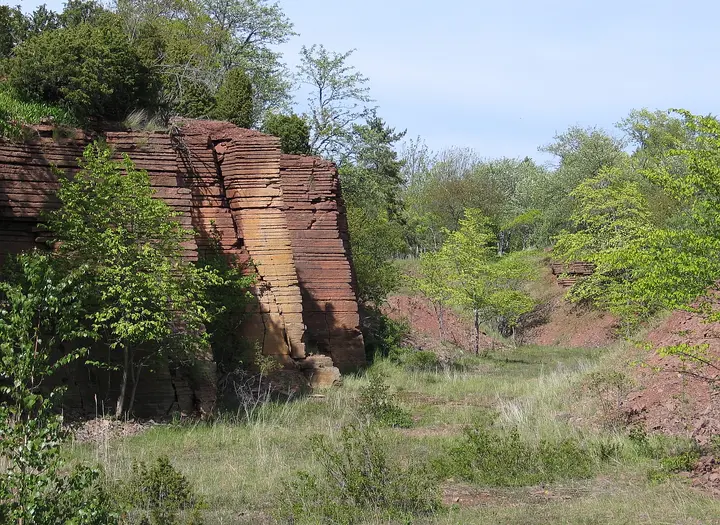
The limestone was partly sourced from the rectory’s land, but mainly from Törnsäter farms. The sandstone was quarried on land owned by J. Törnberg. Construction began in June 1874 and was largely completed by autumn 1876. The church was consecrated on October 14, 1877, and was filled to capacity with visitors from Österplana and surrounding areas. Even then, it was considered one of the most beautiful churches in the region.
Sustainable energy and modernization
Shortly after the church was inaugurated, it became clear that the building lacked heating. As early as 1879, discussions were held about allowing men to keep their hats on during winter services. Three years later, two coke stoves were installed, and in 1906 additional heating stoves were added.
Over the years, there were also proposals to reduce the size of the church interior to make heating easier. Major improvements were not implemented until 1962, when a more cohesive heating system was installed, along with a cloakroom, bridal chamber, and cleaning facilities. Otherwise, the church has mainly undergone repairs and repainting, preserving much of its original appearance.
To meet modern sustainability requirements, the church has now been equipped with geothermal heating through four energy wells, each 210 meters deep. This system covers the building’s future heating needs without fossil fuels and allows year-round use with a significantly reduced climate impact.
At the same time, the electrical system is being upgraded. The old network is replaced with a modern, safe, and energy-efficient solution. The electrical control system is placed in the former entrance hall, which is being converted into a technical room.
The project is supported by Klimatklivet, a Swedish government investment program for reducing greenhouse gas emissions, with co-financing from the European Union. This enables a more sustainable preservation and development of the church for the future.
Furnishings and historical objects
Most furnishings from the old church were considered unsuitable for the new building and were moved to Hönsäter Chapel. However, the medieval baptismal font from the 13th century remains, complemented with a new base and basin.
When the old church was demolished in 1878, several grave monuments were preserved and placed along the cemetery wall. In 1937, they were moved to the interior walls of the church for better preservation. Lily stones from the 13th century were also preserved in this way.
Church bells and donations
The church bells were donated by General Harald Stake in the 17th century and are said to have been named Karin and Kerstin after his daughters. According to legend, his wife threw a silver spoon into the molten metal of the large bell to improve its sound.
The altar candlesticks are also believed to be a gift from the same family. They were made in Amsterdam in 1616 and bear the family’s coat of arms.
Gravestones and memorials
In the southern wall of the church, there is a portrait stone of the vicar Anders Tidström. The stone depicts a man, a woman, and ten children, despite Tidström having no children. This is explained by the fact that the stone originally belonged to someone else and was later re-carved with a new inscription, which was not uncommon.
The old church
The old church was built of limestone and consisted of a rectangular nave with a narrower chancel to the east. Over time, it was expanded in several stages. A porch was added to the south, the chancel was extended, and a sacristy was built on the north side, likely during the 15th century.
The tower was built in 1627 and had a tall, pointed spire. Later changes included a reconstruction in 1822 when the spire was replaced with a lower tower roof. In 1661, side aisles were added on both the north and south sides, with the southern one funded by Harald Stake and later used as a burial chapel.
In 1877, the old church was demolished, and a new one was built about one kilometer to the north. The interior was moved to Hönsäter Chapel. The old church site remains a burial ground, where Harald Stake is among those buried. During demolition, the burial chapel collapsed with many coffins inside; today, a grave slab and memorial stone mark the site.
Deconsecration
The parish council decided in principle to sell Österplana Church and on September 15, 2024, the church was taken out of use through a special deconsecration service. As a result, the building ceased to function as a place for worship and ecclesiastical ceremonies according to the Church of Sweden. The church was subsequently sold during 2024.
Present use and future vision
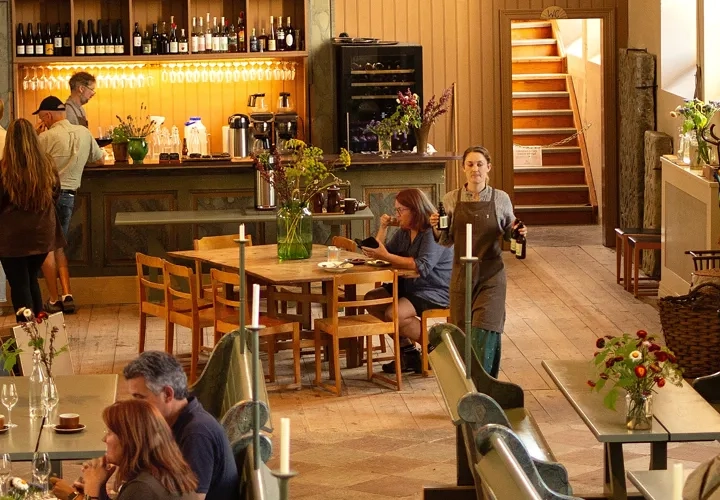
Today, the church is owned and operated under the name Österplana Agriturismo. The aim is to create an open and accessible meeting place where nature and culture interact.
Plans include a center with food service where concerts, performing arts, exhibitions, and other cultural events can take place. The venue will also be available for weddings and celebrations.
There is also an ambition to develop the site into a hub for outdoor life and hiking, where visitors can begin their Kinnekulle experience or take a break along the way. Adjacent to the church, cultivation projects and a kitchen garden are planned, highlighting local flora, biodiversity, and cultural heritage.
A key part of the development is preserving and caring for the building so that it remains a living part of both history and the future. Sustainability is a central focus throughout the project.
Planned renovation
During 2025–2026, an extensive renovation will be carried out. Work begins in summer and autumn 2025 with the installation of geothermal heating, electrical upgrades, and new water connections.
A kitchen and additional visitor restrooms will be built under the gallery to improve functionality. The former church interior, which contained 44 fixed pews, will be carefully adapted by shortening and reusing the pews as dining tables. Pew panels will be transformed into serving counters, and a ceiling sail along with new lighting will be installed to improve acoustics and illumination.
The result will be a flexible, multifunctional space suitable for concerts, cultural events, and dining.
Österplana Agriturismo
Korsgarden
53394 Hällekis
Website: osterplana.se/