


Hjo - Kungslena Pilgrim Trail
Pilgrimsleden between Hjo and Kungslena is an idyllic walking trail that takes you from the timber town of Hjo, beside Lake Vättern, across the scenic Hökensås ridge and on to the medieval village of Kungslena. Along the route you will discover many historical points of interest, lovely bathing spots and beautiful viewpoints.
Pilgrimsleden Hjo-Kungslena is perfect for a gentle hike through varied landscapes, where you can walk at your own pace and rest when you choose. Although it may not be one of the most famous trails in West Sweden, it offers beautiful sandy beaches, exceptional views, historic buildings and fascinating culture.
Highlights Along the Trail
✔ Historic Hjo — Timber architecture, lakeside views and charming cafés
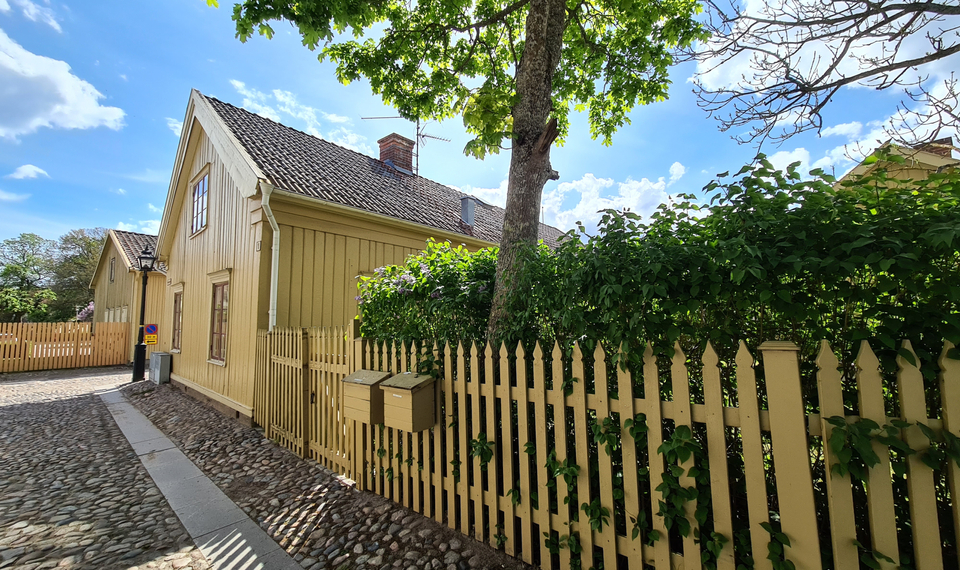
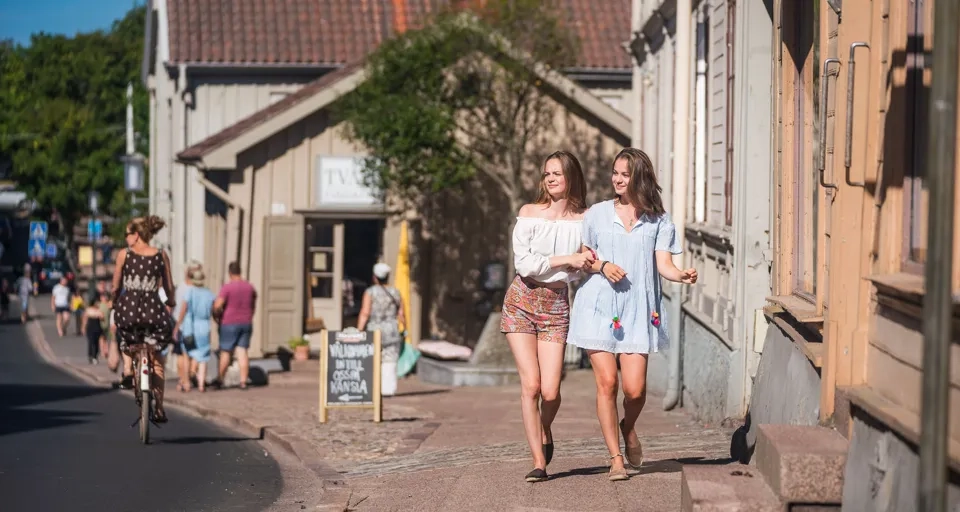
Hjo is known as the wooden town by Lake Vättern, where you’ll find cobbled streets, turn-of-the-century villas, delicatessen shops and a leafy town park overlooking the lake.
The Pilgrim Trail starts at the small boat harbour – and what better way to begin your walk than with a delicious ice cream, of course. By the harbour you’ll find two ice cream cafés: Moster Elins Glass and Gula Paviljongen. Here you can also catch a glimpse of S/S Trafik, one of Sweden’s best-preserved steamships.
From the harbour, cross the bridge over the Hjoån River and continue uphill towards the church and the main square, then on to the lakeside promenade, locally known as “Hjovieran”. Here you’ll find Sweden’s longest illuminated bench and plenty of spots for a refreshing dip.
Tip! If you’re looking for accommodation, we recommend STF Vandrarhem Villa Eira in the town park, Hotell Bellevue by the harbour, and Hotel Spa for Hjo, which you pass just south of Hjo.
✔ The churches – the pilgrim’s second home
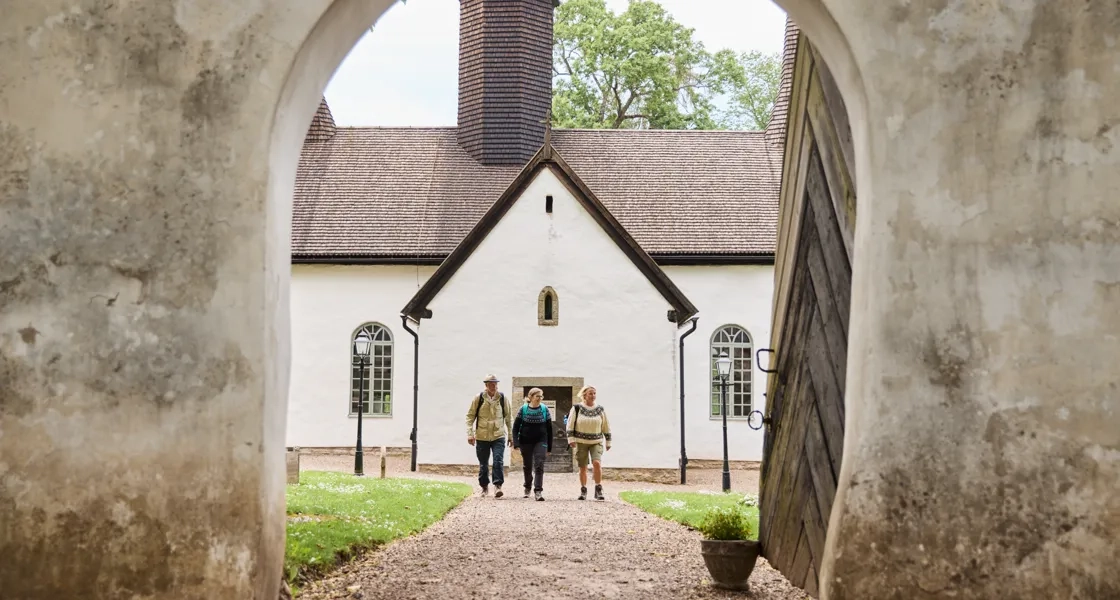
Most people who go on a pilgrimage walk today probably do so mainly to enjoy nature, discover new places and get some exercise. However, the concept of pilgrimage has a long history with spiritual roots, and an important part of the journey is the churches you encounter along the way. Along the Pilgrim Trail from Hjo to Kungslena, there are several churches where you can find shelter for a while, rest your legs, or light a candle and take a moment to reflect.
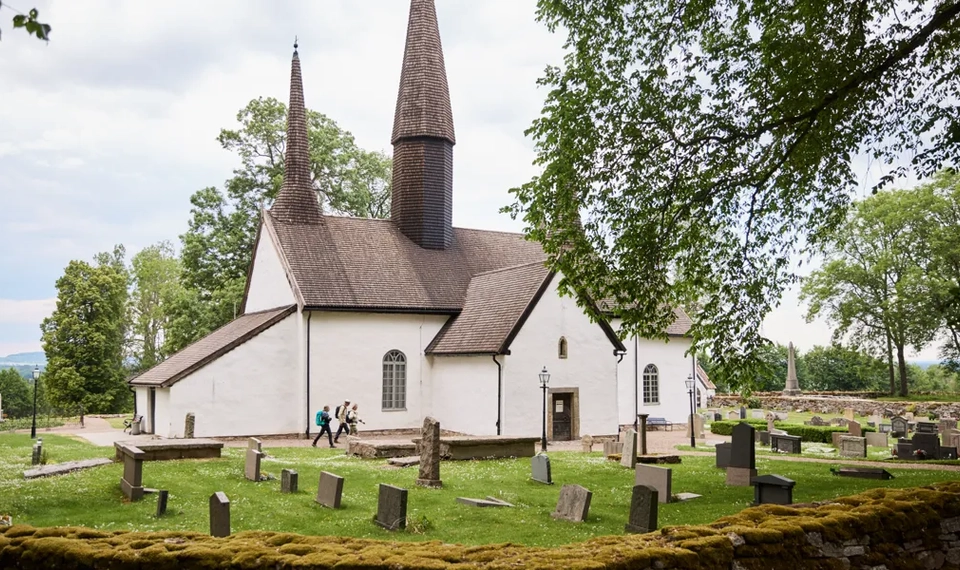
Hjo Church is located right in the main square, and as you walk south from Hjo you will pass Norra Fågelås Church with its well-preserved bell tower dating back to 1363. Klämmesbo Mission House, Fröjered Church and Hömb Church are other noteworthy stops. And of course, Kungslena Church, with its three church towers, has a very distinctive appearance.
✔ Göransnäset bathing spot — a quick stop for a scenic dip
Just south of Norra Fågelås Church, you can stop at the scenic bathing spot of Göransnäset. Here you can dip your toes in the clear waters of Lake Vättern.
There is also a lovely circular walk at Göransnäset. The loop follows the shoreline for much of the way through leafy deciduous woodland, taking you towards Almnäs Bruk and back again. The full loop is around four kilometres long.
✔ Almnäs Estate — A heritage farm with internationally awarded cheeses
Almnäs Bruk is a historic estate with medieval roots, beautifully situated on the shores of Lake Vättern. In recent years, its cheese production has truly put the estate on the map. Over the years, several dairies have operated here, as early as the 1830s.
Today’s cheese production is housed in the old spirits distillery, and all the milk comes from cows grazing in the fields around Almnäs. The farming is entirely organic.
The cheese “Almnäs Tegel” has won several international awards, and “Wrångebäck” has been granted Protected Designation of Origin (PDO) – the first cheese in the Nordic countries to receive this status – and it is also Sweden’s oldest registered cheese trademark. Feel free to buy a piece of cheese from the farm shop to enjoy during the rest of your walk.


✔ Böjan viewpoint — catch your breath with a breathtaking view
After passing Korsgården and road 195, you have the option of taking a short detour north. We highly recommend doing so, as it will take you to Böjan viewpoint, offering a fantastic view over Lake Vättern. If the weather is clear, you may be able to see two thirds of the lake – from the northern tip of Omberg all the way to Gränna in the south.
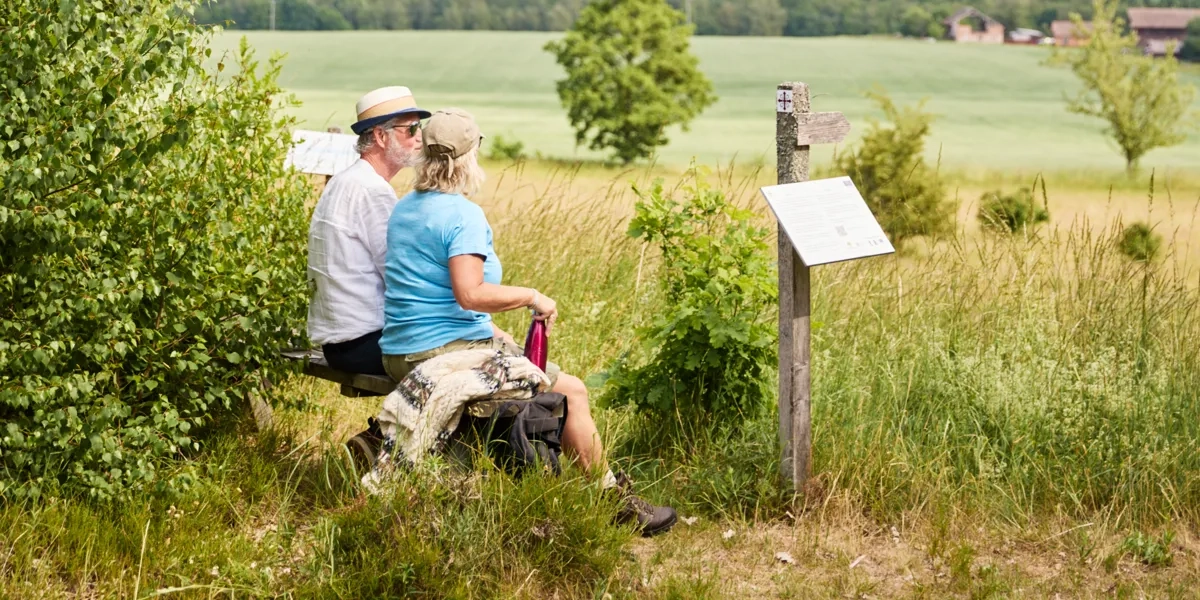
There is a bench where you can rest your legs, as well as information boards about the local area. The detour to the viewpoint is 700 metres one way and is signposted.
✔ Hökensås Ridge & Hållsdammarna — Forest landscape and lakeside picnic spots
Large parts of the trail run through open farmland, but for those looking for woodland walking, the stretch across Hökensås is a real highlight. Here you’ll be surrounded by spruce and pine forests and bilberry shrubs as far as the eye can see. Hökensås is a true paradise for berry pickers.
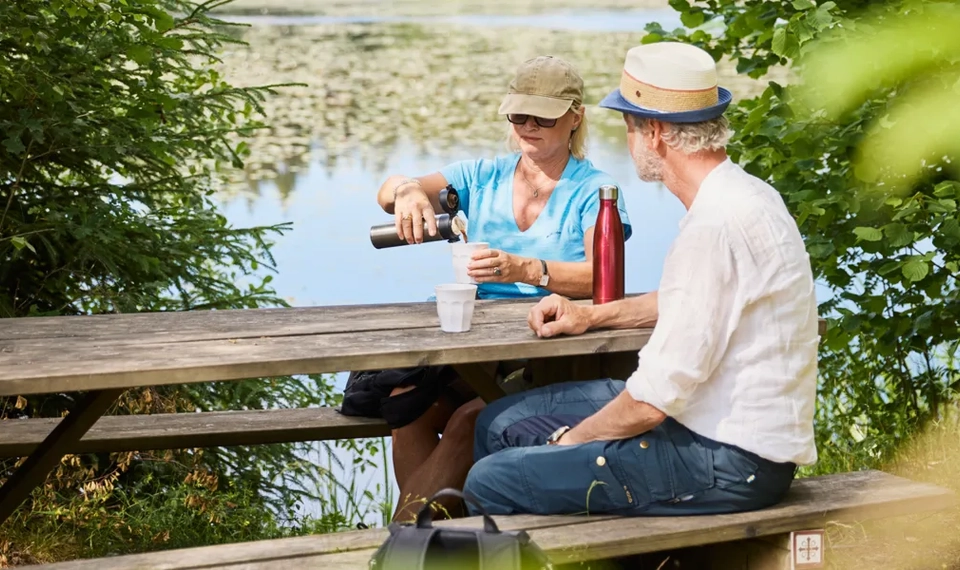
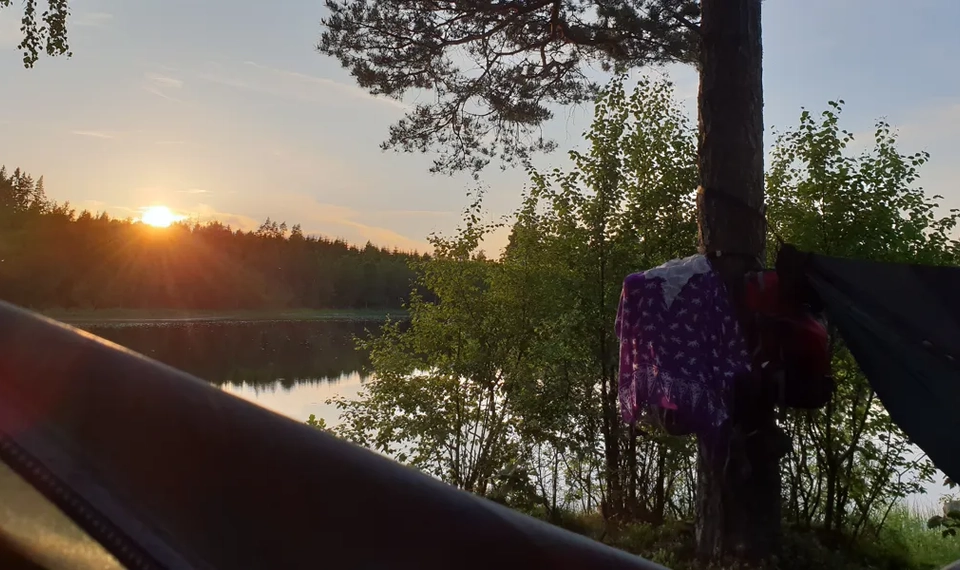
Up on Hökensås you’ll find a string of small forest lakes known as Hållsdammarna – the perfect place to stop for a picnic break.
Don’t miss the chance to spend the night in unique tiny houses located right in the middle of the forest, just a couple of kilometres from the trail. Read more and book with Inforest.
Tip! On your way up Hökensås, you can choose to follow a circular route that takes you past Hökensås Golf Club, where you can enjoy a lovely lunch. This alternative loop is about five kilometres long and reconnects with the main trail near Hållsdammarna.
✔ Fröjered Riverside Bathing — A perfect summer stop
One of the many small villages you’ll pass along the Pilgrim Trail is Fröjered, in Tidaholm municipality. The Tidan River runs through the village and is a popular spot for canoeing. There is a lovely sandy beach here, as well as a popular bathing jetty. During the summer, the kiosk and mini golf course right next to the bathing area are open.
✔ Hömb Village — Picturesque historic houses and local culture
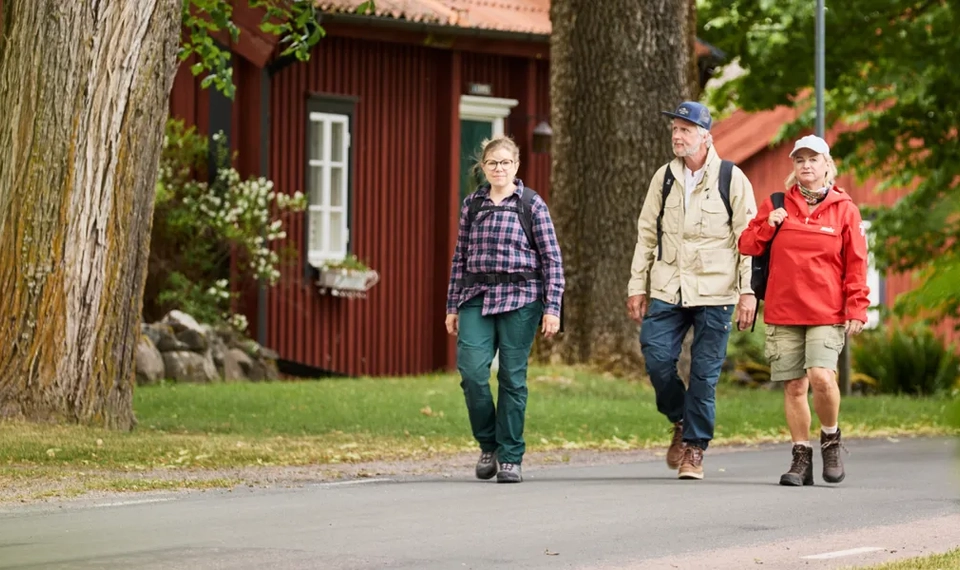
An avenue of wild, overgrown trees leads you to the idyllic row-house village of Hömb. Along both sides of the village lane, red wooden cottages line up, some with grass-covered roofs. The cottages date back to the 17th century and were originally located around Hömb Church, but were moved in the early 19th century to their current location along the village street.
Historically, the cottages served as homes for employees of Kavlås Castle, which you pass shortly after Hömb.

✔ Kungslena — The trail’s medieval finish with its striking church
The final destination of the Pilgrim Trail is Kungslena, or simply Lena, as the parish was originally known – most likely from the Old Norse word “len”, meaning slope.
After Kungslena’s old church was burned down during a battle in 1208, a new one was built. With its three church towers, it is unique of its kind. The middle of the three towers is said to symbolise Birger Jarl. According to legend, the Jarl attended High Mass in the church together with King Håkon of Norway and his son Valdemar – Sweden’s underage king at the time – in 1258, and that the three towers were raised afterwards.
Do step inside the church and admire its large and richly detailed paintings. From the old church, the sandstone baptismal font from the 12th century has been preserved.
✔ Höge Klint viewpoint — a rewarding ending to a long hike
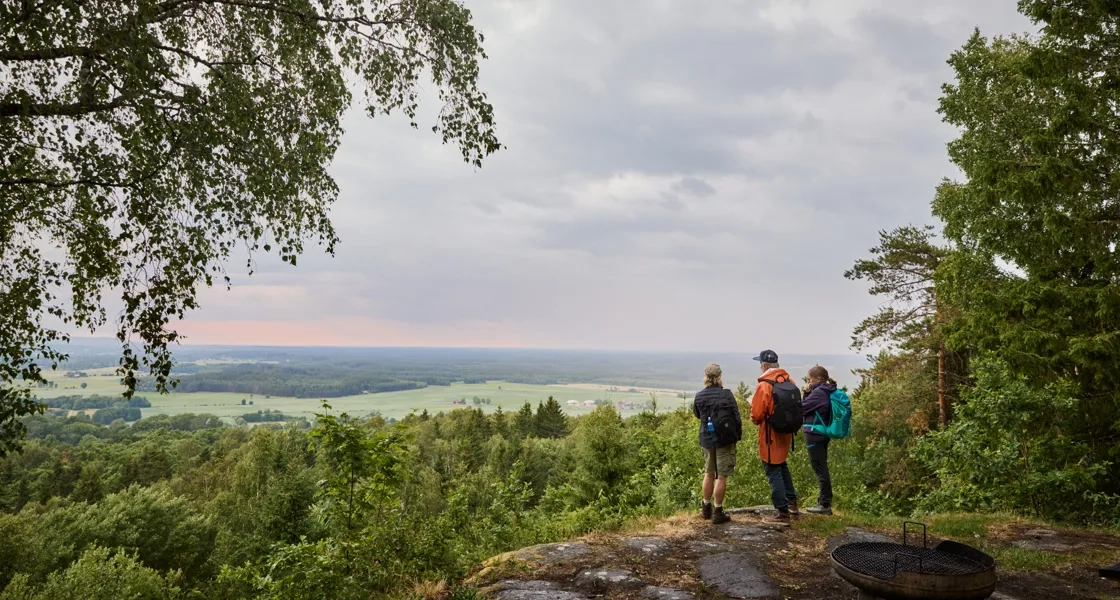
If you still have some energy left in your legs when you reach Kungslena, we recommend taking an extra detour up to Höge Klint viewpoint on Varvsberget. Along the path you can see remains of an ancient hillfort, and once you reach the top – 315 metres above sea level – you’ll be rewarded with a wonderful view of the surrounding landscape. The viewpoint is about one kilometre away, and there is a wind shelter with a barbecue area.
Varvsberget is part of the Platåbergens Geopark and over the years it has been known by several different names, including Kungslenaberget, Fårdalsberget and Granberget.
Fact about the trail
Think about:
- Pace: The trail is suited to a relaxed walking pace, with many opportunities to rest and explore small villages, churches and viewpoints.
- Path Conditions: The route largely follows beautiful minor country roads and forest paths. Some sections may have more elevation but are generally easy to walk.
- Information Plaques: Along the way there are about 20 information boards where you can learn about local nature, history and culture.
- Pilgrim Culture: The trail is part of the broader European Cultural Route of pilgrim paths, with deep roots in medieval travel traditions.
Tips for Walkers
- Carry enough water and snacks between towns and rest points.
- Wear comfortable walking shoes and dress in layers according to weather conditions.
- The trail is also suitable for cycle exploration on sections that are on gravel and paved roads.
Marking:
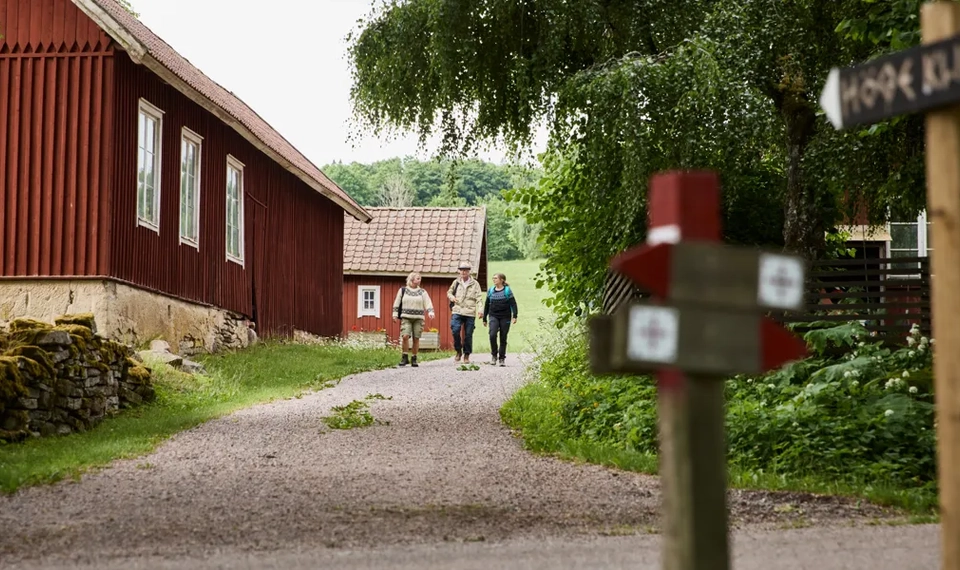
Marked with the classic red St Olav’s cross symbol.
Start and end:
The most common starting point is Hjo Harbour or Hjo Church, with the route then finishing in Kungslena.
How to get here:
Public Transport: Regional and local buses serve Hjo and other nearby towns (check current schedules with Västtrafik).
Length: approx 47 kilometres
Estimated Time: about 15 hours (suitable for 2–3 days’ walking)
Difficulty: Easy — predominantly easy walking on gravel roads and paths
Terrain: Asphalt, gravel roads, pasture and forest paths
Waymarking: Marked with the classic red St Olav’s cross symbol
Accommodation: There are several walker-friendly places to stay along the route >>