

Classic Swedish pastries
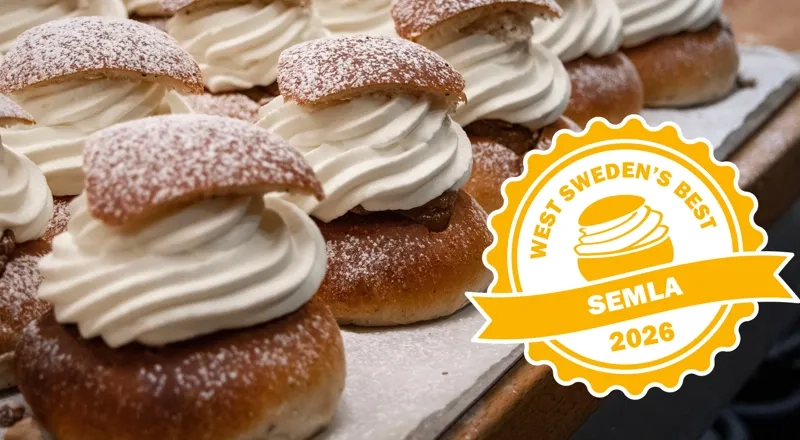
Semla, Fettisdagsbulle, Fastlagsbulle, Hetvägg
A beloved Shrove Tuesday classic that goes by many names. The traditional semla is a cardamom bun filled with almond paste and whipped cream, but today you’ll find everything from croissant semlor and Nutella semlor to semla wraps and mini versions.
Semlor are available for most of the winter at almost every café and bakery across West Sweden.
Shrove Tuesday (Fettisdagen) falls 47 days before Easter, so the date varies between February and early March.
Our followers on social media have voted for the best semla in West Sweden and the winner is Nordfeldts Konditori in Vänersborg!
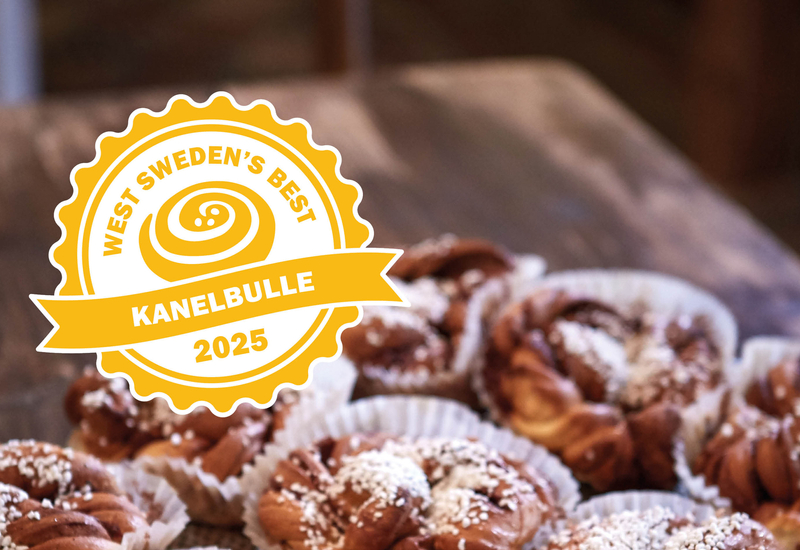
The cinnamon bun – a beloved classic
This iconic pastry is often associated with Swedish fika abroad and even has its own day of celebration on 4 October. A true classic that you’ll find in most cafés, bakeries and on coffee tables across Sweden.
Shaped as a spiral or the currently fashionable knot, flavoured with cinnamon and topped with pearl sugar, it’s a favourite to have with a cold glass of milk or a cup of coffee.
We hold an annual competition in which our social-media followers vote for the best cinnamon bun in West Sweden.
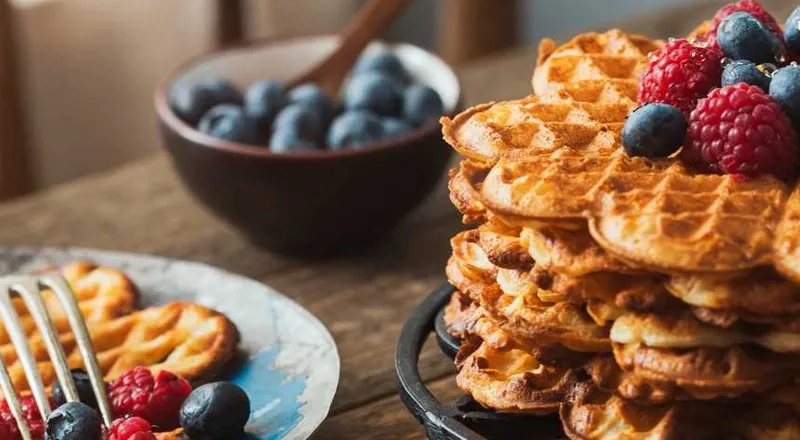
The waffle – a crispy favourite
One of the many pastries with its own day of celebration is the waffle, most often served with whipped cream and jam, it works just as well in a savoury version, for example with salmon, Skagen shrimp salad, or fresh prawns.
Swedish waffles are thinner than the well-known Belgian ones and are usually baked in a special waffle iron, which is a fixture in many Swedish homes and gives them their classic heart shape.
Waffle Day is celebrated every year on 25 March.
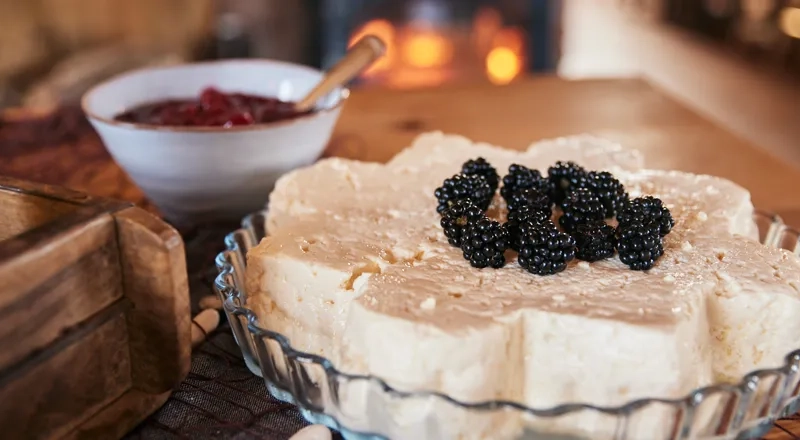
Egg cheese – the pride of Bohuslän
Stay with us on this one! Äggost (egg cheese) is an old tradition from Bohuslän, made from eggs, milk and cream that are gently set and drained in a mould, resulting in a mild, smooth dessert of real character. It is often served with jam as part of a festive meal. Sometimes an unsweetened version is served with pickled herring.
Now recognised as part of the coast’s culinary heritage, egg cheese has its own day of celebration on 28 March.
Taste this delicacy at the following places: Café Torpet in Skepplanda, Margaretas Kök & Skafferi on Tjörn, and the café at Bohusläns Museum – and sometimes you’ll find it at a local farm as well.
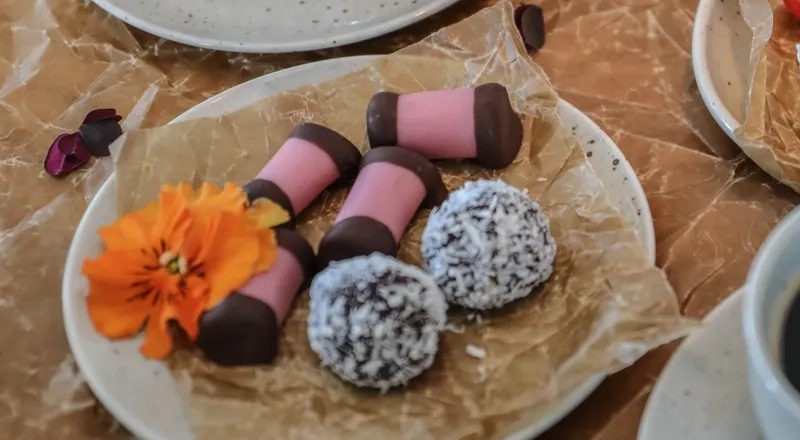
Punch roll – aka the vacuum cleaner
Another Swedish classic with its own day in the national pastry calendar: 7 March is Punch Roll Day in Sweden.
Its nickname, dammsugaren (the vacuum cleaner), comes from its resemblance to the tubular vacuum cleaners of the 1920s. According to tradition, the filling was originally made from leftover cake crumbs soaked in arrack to disguise the taste.
At Conditori Nordpolen in Vara, the vacuum cleaner has been taken to a whole new level. Here you can enjoy a centraldammsugare – an extra-long version of the pastry.
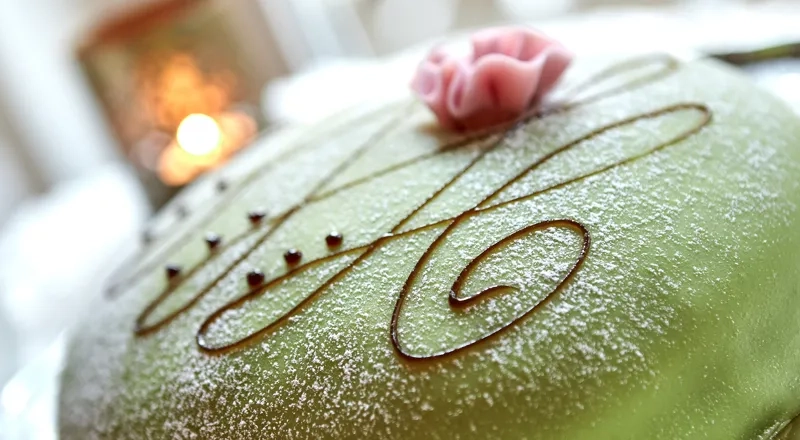
Princess cake – a party favourite
When birthdays and other celebrations are marked in Swedish homes, this beautiful creation is often centre stage. It takes great skill to cover the layers of sponge cake, tangy raspberry jam, silky vanilla custard and thick dome of whipped cream beneath its smooth covering of green marzipan. On top sits a pink marzipan rose – a highly coveted detail at parties, especially among younger guests.
The guided fika tours in Alingsås always end with Princess cake.
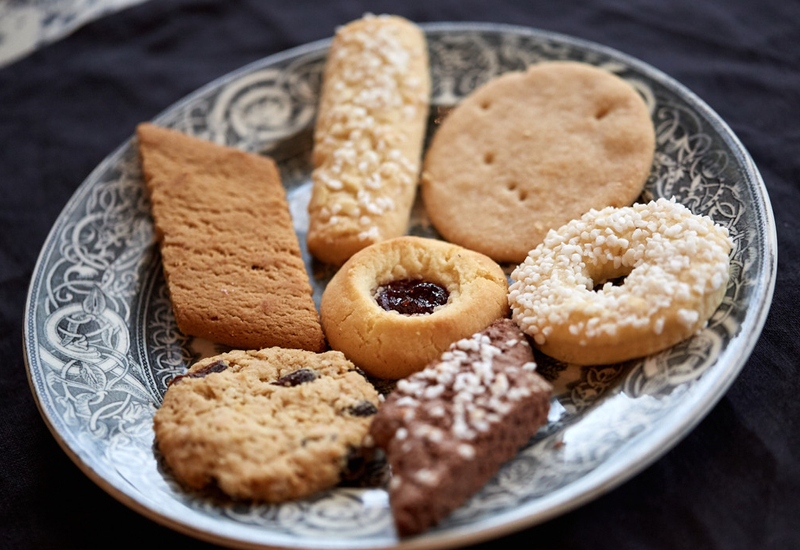
Seven kinds of biscuits – the perfect number
This delightful tradition dates back to the late 19th century and is still very much alive today, even enjoying a fashionable revival. Why seven varieties? Tradition had it that this was the ideal number to offer guests – fewer could seem stingy, more could look like showing off.
Many of the biscuits are based on the same simple dough, so baking them yourself is easier than you might think.
In the café town of Alingsås, you can easily find this classic assortment.
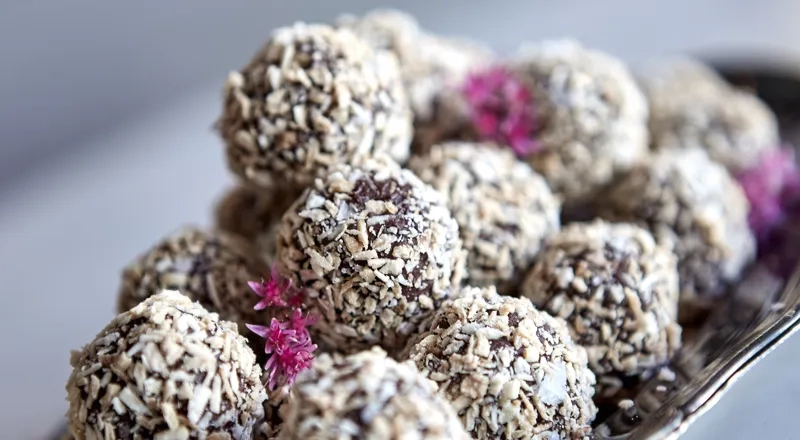
Chocolate truffles – childhood in one bite
A much-loved treat that requires no oven, made from oats, butter, cocoa, coffee and sugar, and usually rolled in coconut flakes or pearl sugar. Easy to find, easy to like, easy to make – and an obvious favourite with both children and adults.
Chocolate Truffle Day is celebrated on 11 May in Sweden, but they’re available year-round in most self -respecting cafés and bakeries across West Sweden.
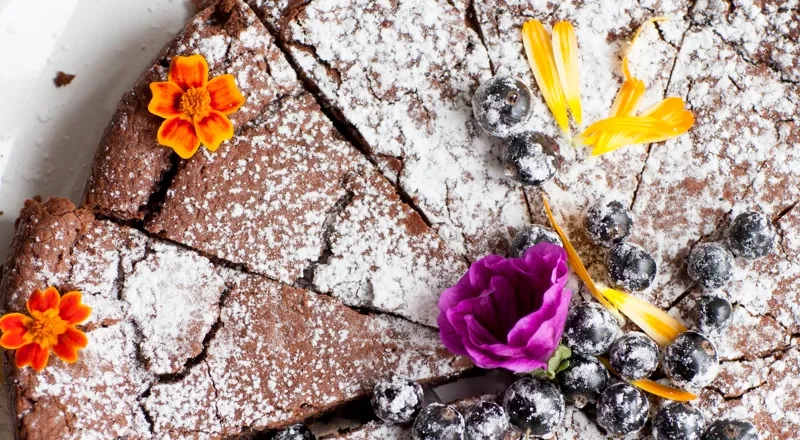
Kladdkaka – a gloriously gooey chocolate classic
Kladdkaka translates as ‘gooey cake’, and this sticky favourite, made with eggs, flour, sugar, butter and cocoa, truly lives up to its name. Rich, dense and deliciously gooey, it’s best served slightly warm with whipped cream or vanilla ice cream – ideally with a few fresh berries on the side because, you know – health!
It’s also a simple but deeply satisfying thing to make at home and is often one of the first cakes children try making on their own.
Kladdkaka Day is celebrated every year on 7 November.