

Pilgrim Path Läckö–Hjo - Nature, history and culture
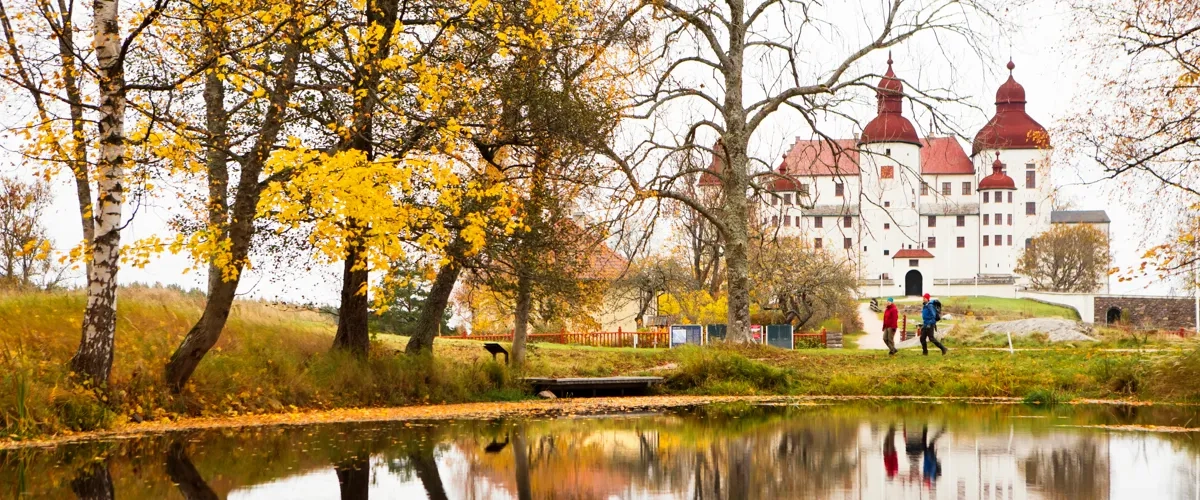
The Pilgrim Path between Läckö and Hjo brings together nature, history and culture. From the spectacular Läckö Castle in the Vänern archipelago to the picturesque wooden town of Hjo on the shores of Lake Vättern.
The trail is under development and scheduled for completion in 2026. The total length of the trail is expected to be 203 km. At present, there is no official trail map. However, large parts of the route follow existing trails that can already be walked today:
The Biosphere Trail/Pilgrim Trail Läckö Castle – Forshem
Pilgrim Path Skara-Husaby
Pilgrim Path Falkoping-Varnhem
Pilgrim Path Hjo-Kungslena
Photographer: Jonas Ingman
Twelve places along the Pilgrim Path Läckö–Hjo not to be missed:
1. Läckö Castle and the fishing village Spiken
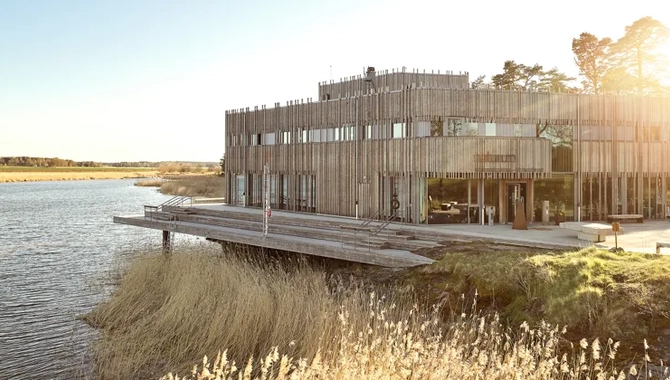
It’s hard not to be impressed by Läckö Castle and its surroundings. This baroque castle has been named Sweden’s most beautiful and is situated on a promontory in the Eken archipelago. In the grounds you’ll find the castle’s lovely gardens and the Naturum Vänerskärgården Victoriahuset Visitor Centre.
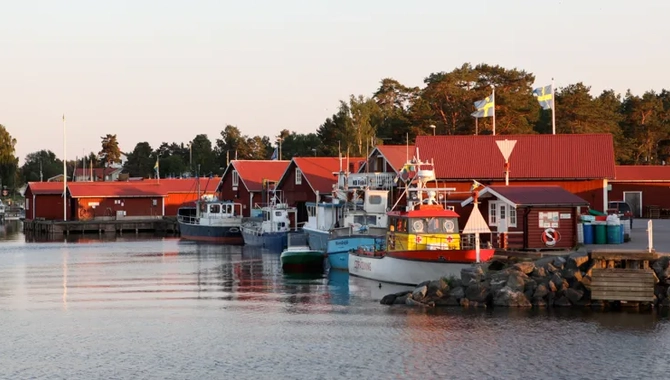
Further along in the Eken archipelago lies the charming fishing village Spiken, situated in one of Europe’s largest inland ports. Here you can eat well, cool down with an ice cream and wander through the small boutiques (mainly open in spring and summer). And you should definitely try the local speciality, löjrom (bleak roe), at Restaurant Sjöboden, for example.
In the area you will also find Naven Outdoor, offering guided tours in nature around Lake Vänern.
- Accommodation is available close to the castle at the hotel at Naturum Vänerskärgården - Victoriahuset or at Läckö Strand Camping with cabins, shop and café.
Photographer: Hans Kongbäck
2. Lidköping – the porcelain town
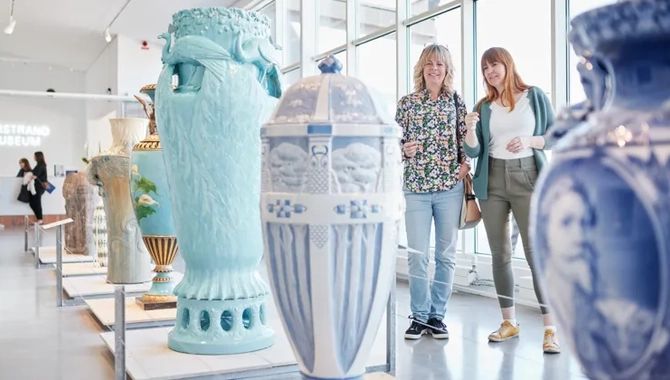
The trail passes straight through Lidköping. The town is closely associated with porcelain production, and at the Rörstrand Museum you can explore more than 300 years of Swedish porcelain history. The town squares and public spaces also bear clear traces of the porcelain era. Take the opportunity to stop for a fika – in the town centre you’ll find a café on almost every corner.
If you want to learn more about the town and the region’s history, take a tour of the Vänern Museum, which has a range of exhibitions about the area.
Accommodation tips in Lidköping:
- Lidköping Stadshotell – a classic hotel in the town centre
- Bäverli Hills – unique cabins in a rural setting
- Kronocamping – camping, cabins and activities by Lake Vänern
- Best Western Plus Edward Hotel – comfortable, centrally located hotel
Photographer: Jonas Ingman
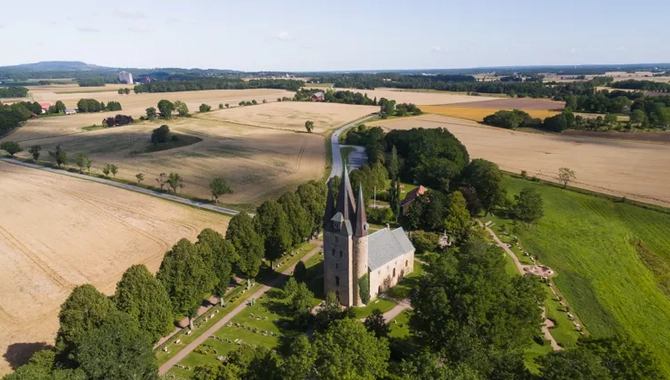
3. Husaby Church and the Bishop’s Fort
At Husaby, you encounter one of Sweden’s oldest and most important medieval church sites. Husaby Church, with its three distinctive spires, dates back to the 11th century and was Sweden’s first cathedral. Inside, medieval wall paintings uncovered during the 1901 restoration make the church as impressive on the inside as it is on the outside.
A few hundred metres from the church lies the Husaby Biskopsborg, the Bishop’s Fort. It was built in several stages, starting probably around 1480. The fort consists of an immense tower with a circular stone rampart, and functioned as a defensive fortress.
The Bishop’s Fort is on private land with housing nearby, so please be respectful when visiting.
Photographer: Jesper Anhede
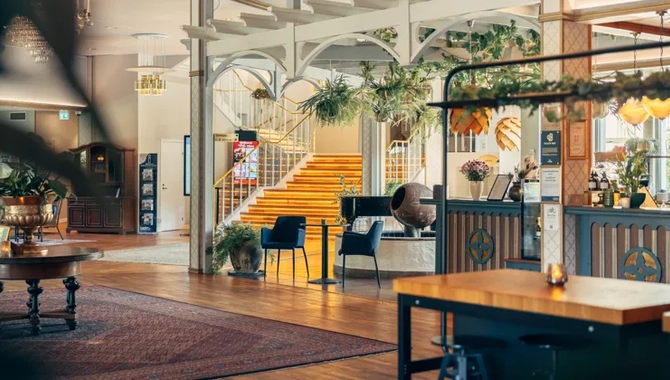
4. The spa village of Lundsbrunn
The trail continues towards the village of Lundsbrunn, which has been associated with health and well-being since the early 18th century. Over time, a community developed around the mineral spring, and several historic spa buildings remain. Today, Lundsbrunn Resort and Spa can be found on the site, with a restaurant, hotel, and spa.
Photographer: André Nordblom
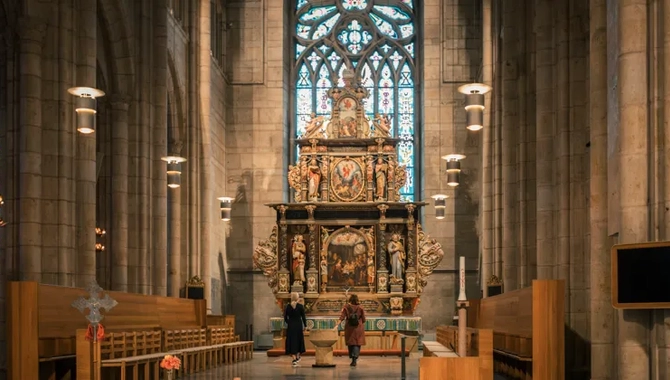
5. Skara – cathedral, history and culture
Skara Cathedral is one of the most impressive sites along the pilgrimage. The cathedral was inaugurated in the 1150s and is a prominent landmark with its two towers, often referred to as the “Skara trousers”. Did you know that the Diocese of Skara is Sweden’s oldest?
Skara offers a rich cultural and historical heritage. Recommended visits include Västergötlands Museum, the Veterinary Museum, the open-air museum Fornbyn, and the old library housing Sweden’s oldest book, the Skaramissalet. Art enthusiasts can visit the Lars Lerin collection at Skara Stadshotell, while Skara Konsthotell displays works by renowned Swedish artists such as Carl Larsson, Anders Zorn, Jenny Nyström, and Bruno Liljefors. If second-hand shopping is your thing then stroll along the area called “Stråket” and pop into some of the lovely shops along it.
Accommodation tips in Skara:
- Järnvägshotellet B&B – cosy accommodation near the railway station
- Skara Stadshotell – classic hotel in the town centre with restaurant and bar
- Skara Konsthotell – modern hotel with a focus on art
Photographer: Monika Manowska
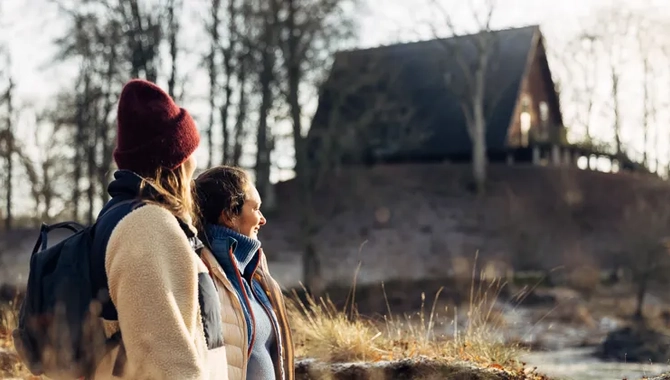
7. Varnhem and Kata Gård
Another impressive church along the trail is Varnhem Abbey Church. Stroll beneath the centuries-old vaulted ceilings where monks once held mass and sang their hymns. The church is the burial place of four Swedish kings and one queen. Nearby lie the ruins of the Cistercian monastery founded in the 12th century.
On the hill behind the abbey ruins lies Kata Gård, where the remains of one of Sweden’s oldest churches can be found. The crypt is considered the oldest preserved room in Sweden, and archaeological excavations have uncovered traces from before the monks arrived in the 1100s. A museum building has been constructed over the ruins, a triangular-shaped structure that has received international praise for its spectacular architecture.
Photographer: André Nordblom
8. Lake Hornborga – nature, birdlife and culture
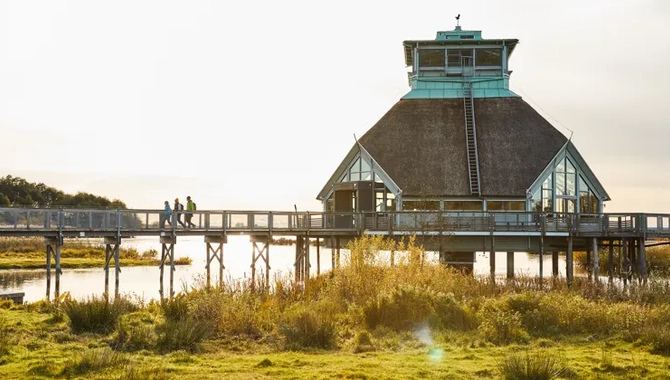
You can admire Lake Hornborga along a large section of the Pilgrim Path. A visit to Naturum Hornborgasjön gives insight into the area’s rich birdlife, nature and history. At the visitor centre you’ll also find Café Doppingen, serving light lunches and fika in a beautiful limestone building with a thatched roof and large panoramic windows.
- Nearby Lake Hornborga is Löfwings Ateljé & Krog, where art, restaurant, café and a bed & breakfast are combined.
- Another cosy place to stay in the area is Nästegården Bed & Breakfast.
Photographer: Jonas Ingman
9. Gudhem Abbey Ruins
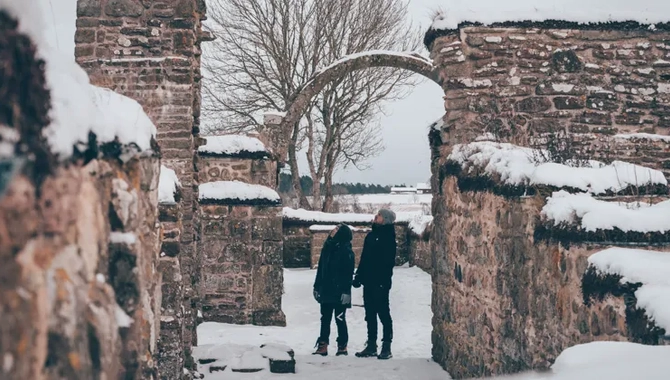
In Gudhem you’ll find the ruins of a Cistercian Abbey which was founded in the 1160s. It was home to an order of nuns until Gustav Vasa’s reformation in 1527, when laws were passed that eventually brought monastic life in Sweden to an end.
The abbey ruins sit in a lovely spot overlooking Lake Hornborga and in the adjacent abbey museum you can learn what daily life in the monastery was like.
Photographer: Henrik Theodorsson / Platåbergens Geopark
10. Falköping and the Mösseberg plateau mountain
The Pilgrim Path passes through Falköping and St Olof’s Church, whose oldest parts date back to the 1100s. The pretty town offers small local shops and cafés. Make sure to allow time to visit some of Falköping’s most popular destinations. Falbygdens Museum, with its interesting history exhibitions, is a great stop, and Falbygdens Osteria with its cheese shop and restaurant is just a short detour from the trail.
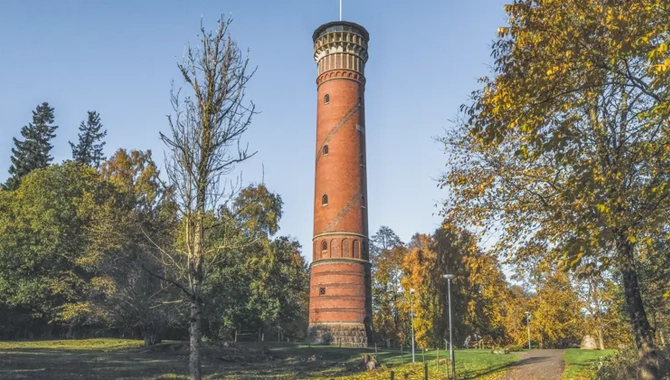
Approaching Falköping, the trail crosses the Mösseberg plateau mountain. Here you pass Mösseberg Zoo and Mösseberg Park, home to the popular spa hotel Mössebergs Kurort. On the mountain stands a 35-metre-high observation tower with wide views of the surrounding landscape. Both the zoo and the tower have free entry.
Photographer: Henrik Theodorsson
11. Kungslena and Hömbs church village
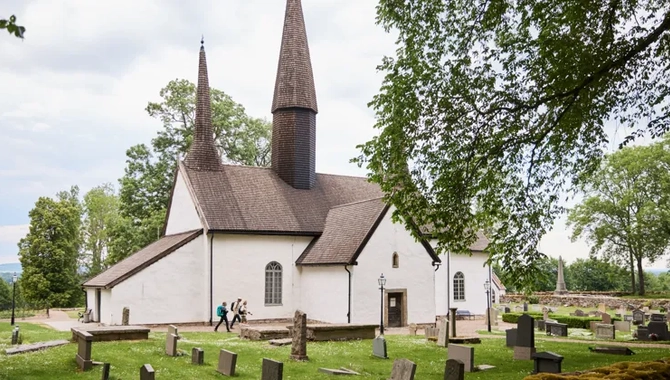
In the village of Kungslena stands a unique church with three towers, built after the Battle of Lena in 1208, when the previous church was destroyed. The central tower is said to symbolise Birger Jarl. Step inside to admire the large, detailed paintings, and see the preserved sandstone baptismal font from the 12th century.
The trail continues, and after about 8 km you first pass Kavlås Castle before reaching the idyllic linear village of Hömb. Red wooden cottages line both sides of the village street, some with grass-covered roofs. The cottages date from the 17th century and were originally located around Hömb Church before being moved here in the early 19th century.
Photographer: Jonas Ingman
12. Almnäs Bruk and the wooden town of Hjo
As you approach the final destination of the Pilgrim Path, you are treated to fine views of Lake Vättern before reaching Almnäs Bruk by the lakeshore, known for its organic cheese production. In the farm shop you can buy award-winning cheeses such as Almnäs Tegel and Wrångebäcksost. The long sandy beach at Göransnäset invites rest and refreshing swims.
The pilgrimage ends in Hjo, the picturesque wooden town on Lake Vättern, with its cobbled streets, turn-of-the-century villas, delicatessen shops and leafy town park overlooking the lake. Don’t miss the shoreline promenade, locally known as the “Hjovieran”, featuring Sweden’s longest illuminated bench and plenty of spots for a cooling dip.
Why not celebrate the end of your walk with an ice cream? By the harbour you’ll find two ice cream cafés, Moster Elins Glass and Gula Paviljongen. Here you can also see S/S Trafik, one of Sweden’s best-preserved steamships.
- If you want to stay over, we can recommend the STF Vandrarhem Villa Eira in the town park, Hotell Bellevue by the harbour or Spa for Hjo which you’ll pass just south of Hjo.
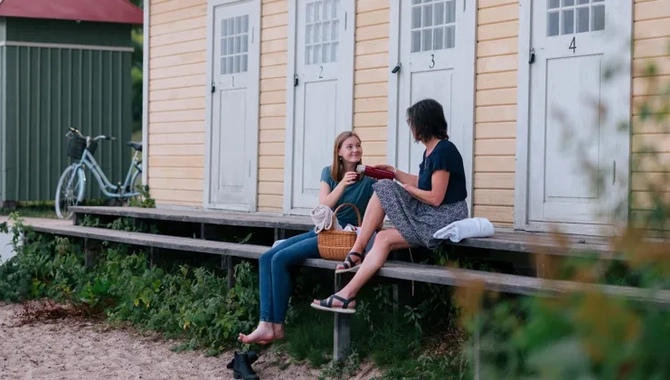
Photographer: Linus Bergman